Getting Started
UraniumUI is a presentation framework for .NET MAUI. It combines native-MAUI-based controls, theming, dialogs, dynamic forms, validation infrastructure, and extension points for building production-ready app interfaces.
It is built on top of the .NET MAUI infrastructure, so you can start with UraniumUI's ready-made presentation layer and still drop down to native MAUI APIs when a screen needs custom behavior.
There are 2 ways to get started with UraniumUI:
- Existing Projects
- New projects
New Projects
UraniumUI provides a project template to start a new project with UraniumUI. You can customize the startup project with parameters like icon library, theme, and more.
Install latest templates from NuGet:
dotnet new install UraniumUI.TemplatesCreate a new project:
dotnet new uraniumui-app -n MyProjectOr create the blank starter:
dotnet new uraniumui-blank-app -n MyProject
Visual Studio
Also, templates has ide.host.json implementation that allows to create a new project from Visual Studio.
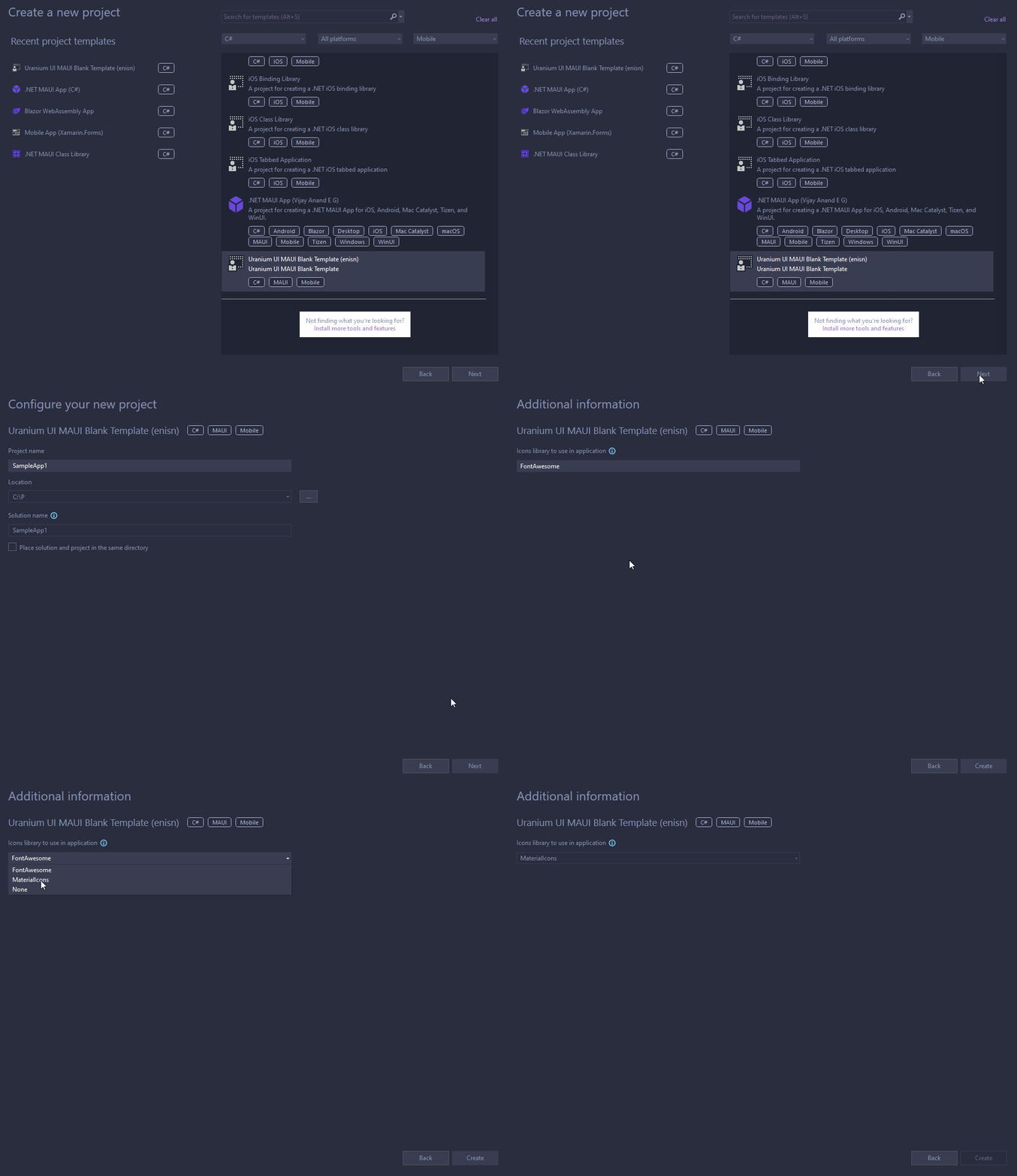
Parameters
Icons: Defines the icon package configured by the template. Default isMaterialSymbols(Material Symbols). Available values areFontAwesome,MaterialSymbols,FluentIcons, andNone.Example:
dotnet new uraniumui-app -n MyProject --Icons FluentIconsDialogs: Configures dialog integration. Available values areMopups,CommunityToolkit, andNone.Example:
dotnet new uraniumui-app -n MyProject --Dialogs CommunityToolkitBlurs: AddsUraniumUI.Blurssetup to the starter project.Example:
dotnet new uraniumui-app -n MyProject --Blurs true
Existing Projects
Install the UraniumUI.Material NuGet package to your MAUI application.
dotnet add package UraniumUI.MaterialUraniumUI doesn't include any theme by default. Pick one of the themes and install it. Since there is only one theme for now, you can install UraniumUI.Material directly instead of installing both UraniumUI and UraniumUI.Material.
Go to
MauiProgram.csand add UraniumUI Handlers.UseUraniumUI() .UseUraniumUIMaterial() // 👈 Don't forget these two lines.Go to
App.xamland addColorResource&StyleResourceof Material- Define following xml namespace:
xmlns:material="http://schemas.enisn-projects.io/dotnet/maui/uraniumui/material" - Then define
ColorResourceandStyleResourceinto MergedDictionaries<ResourceDictionary.MergedDictionaries> <ResourceDictionary x:Name="appColors" Source="Resources/Styles/Colors.xaml" /> <ResourceDictionary x:Name="appStyles" Source="Resources/Styles/Styles.xaml" /> <material:StyleResource ColorsOverride="{x:Reference appColors}" BasedOn="{x:Reference appStyles}" /> </ResourceDictionary.MergedDictionaries>You can use your styles to override UraniumUI Material styles with following snippet. Check Colors & Styles Docuementation for more detailed customization.
<ResourceDictionary x:Name="appColors" Source="Resources/Styles/Colors.xaml" />

<material:StyleResource ColorsOverride="{x:Reference appColors}">
    <material:StyleResource.Overrides>
       <ResourceDictionary x:Name="appStyles" Source="Resources/Styles/Styles.xaml" />
   </material:StyleResource.Overrides>
</material:StyleResource>
- Define following xml namespace:
(Optional) Installing a font icon library is recommended. Material Symbols is the current recommended path.